Is the Galaxy S26 Ultra better than the Iphone 17 Pro Max? We Tested Both
The annual showdown between Samsung and Apple represents the absolute pinnacle of the mobile industry. In the electronics world, few rivalries carry as much weight or influence as the battle between the Galaxy S series and the iPhone Pro Max lineup. This year, the stakes have been raised to unprecedented heights. With the release of the Galaxy S26 Ultra and the iPhone 17 Pro Max, both manufacturers have moved beyond incremental updates, introducing radical shifts in materials science, artificial intelligence integration, and optical engineering. For consumers looking to invest in a flagship device that will likely remain relevant for the next half-decade, the choice has never been more difficult or more critical.
The Galaxy S26 Ultra arrives with a renewed focus on "Hyper-Performance," aiming to solidify its place as the ultimate tool for power users and mobile photographers. Conversely, the iPhone 17 Pro Max leans heavily into the "Pro" moniker, refining its ecosystem synergy and introducing hardware-level optimizations for its proprietary silicon that promise to bridge the gap between mobile and desktop computing. This analysis is based on comprehensive testing across various real-world scenarios—from professional content creation and high-intensity gaming to day-to-day productivity and long-term battery endurance.
Design and Build Quality: The Battle of Premium Materials
Samsung has evolved the industrial design of the Galaxy S26 Ultra by moving toward a "Shield Titanium" frame. This new alloy is significantly more resistant to scratches than previous iterations and features a matte, micro-textured finish that effectively repels fingerprints. The device maintains its signature boxy silhouette, which provides a massive canvas for the integrated S Pen, but the edges have been subtly contoured to improve ergonomics during one-handed use. The display is protected by the latest generation of Armor Glass, which reduces reflections by nearly 80 percent, making it remarkably legible under direct noon sunlight.
Apple, on the other hand, has introduced the "Titanium Air" chassis for the iPhone 17 Pro Max. By utilizing a proprietary injection molding process, Apple has managed to shave off nearly 15 grams of weight compared to the previous model while actually increasing structural rigidity. The aesthetic remains consistent with the iconic flat-edge design, but the bezels have reached a point of near-invisibility. The introduction of the "Unified Button"—a haptic, pressure-sensitive strip that replaces the volume and Action buttons—represents a move toward a completely portless and buttonless future. While it takes a few days to master the pressure-sensitive gestures, the result is a cleaner, more water-resistant design.
Display Technology: Peak Brightness vs. Color Accuracy
The Galaxy S26 Ultra features a 6.8-inch Dynamic AMOLED 4X display with a variable refresh rate of 1Hz to 144Hz. Samsung continues to lead the industry in peak brightness, with this panel reaching a staggering 3,200 nits. This is particularly beneficial for HDR10+ content creators who need to review footage in outdoor environments. The colors are punchy, vibrant, and highly customizable through the software settings. However, the real standout feature is the "Ultra-Low Latency" layer, which makes the S Pen feel as though you are writing with real ink on paper, with no perceivable delay.
The iPhone 17 Pro Max counters with a 6.9-inch Super Retina XDR display utilizing "ProMotion 2.0." While its peak brightness sits slightly lower at 2,800 nits, Apple’s focus remains on reference-grade color accuracy. For photographers and videographers who require their mobile screen to match their professional monitors, the iPhone 17 Pro Max remains the gold standard. The new "Adaptive Dimming" technology also works wonders for eye strain, subtly shifting the pixel intensity based on ambient light and the type of text being read. It is a more "natural" looking screen, whereas the Samsung is more "spectacular."
Performance and Silicon: Snapdragon 8 Gen 5 vs. A19 Pro
Under the hood, the Galaxy S26 Ultra utilizes the Snapdragon 8 Gen 5 "For Galaxy," a chip manufactured on a 2nm process. In our testing, the multi-core performance has finally closed the gap with Apple’s silicon. Where the S26 Ultra truly shines is in its thermal management. Samsung has implemented a "Dual-Path Vapor Chamber" that covers nearly 70 percent of the internal components. This means that during an hour-long session of high-end gaming or 8K video rendering, the device does not throttle its performance, maintaining a consistent frame rate that surpasses almost every other Android device on the market.
Looking for the best Electronics deals on Amazon?
Browse Now →The Apple A19 Pro chip in the iPhone 17 Pro Max continues to be a marvel of efficiency. While its raw peak speeds are comparable to the Snapdragon, its "Neural Engine" is leagues ahead in processing on-device AI tasks. Whether it is real-time language translation, complex video masking in Final Cut Mobile, or background noise isolation in a crowded street, the iPhone handles these tasks with a fluidity that feels instantaneous. Apple’s tight control over the hardware-software stack ensures that apps are optimized to a degree that Android developers struggle to match, leading to smoother animations and faster app launch times across the board.
Camera Systems: The Zoom King vs. The Video Master
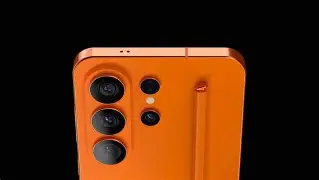
Photography is perhaps the most contested category between these two titans. The Galaxy S26 Ultra maintains its lead in versatility. The new 200MP Main Sensor uses "Hexa-Binning" technology to produce 24MP images that are rich in detail and dynamic range. The "Space Zoom" has been overhauled, now featuring a 20MP 10x periscope lens that uses AI upscaling to produce usable images at 100x magnification. In our tests, the 50x zoom shots were remarkably clear, making it a favorite for wildlife photographers and concert-goers. The addition of "Expert RAW" integration into the main camera app also allows for deeper professional control without needing to switch modes.
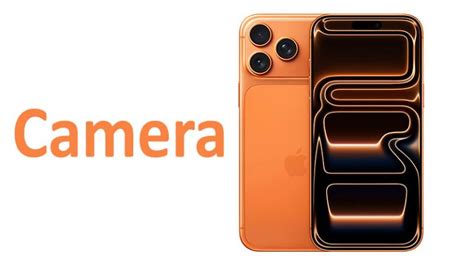
The iPhone 17 Pro Max approaches imaging with a focus on "Cinematic Quality." While it may not have the extreme telephoto reach of the Samsung, its 48MP triple-lens system offers unparalleled consistency across all focal lengths. The transition when zooming from the 0.5x ultra-wide to the 5x telephoto is seamless, with perfectly matched color science. Apple has introduced "Spatial Video 2.0," allowing for high-bitrate 3D recording that looks lifelike on VR headsets. For social media creators and professional videographers, the iPhone’s Log recording and ProRes capabilities remain undisputed, providing a level of post-production flexibility that the Galaxy still can't quite replicate.
Galaxy S26 Ultra: Pros and Cons
- Pro: Unmatched zoom capabilities and telephoto versatility for long-distance photography.
- Pro: The integrated S Pen remains the best tool for productivity, note-taking, and remote camera control.
- Pro: Superior thermal management allows for sustained peak performance during heavy gaming.
- Pro: The anti-reflective display coating significantly improves outdoor visibility compared to competitors.
- Con: The large, angular design can feel unwieldy in smaller hands or tight pockets.
- Con: One UI, while feature-rich, can feel cluttered for users who prefer a minimalist interface.
Iphone 17 Pro Max: Pros and Cons
- Pro: Industry-leading video recording quality with professional-grade color science and stabilization.
- Pro: The A19 Pro chip offers the best on-device AI performance and energy efficiency in the market.
- Pro: Ecosystem integration with Mac and iPad provides a seamless workflow for professional users.
- Pro: Resale value tends to hold much better over a three-to-five-year period than Android flagships.
- Con: Charging speeds are still significantly slower than the fast-charging capabilities of the Galaxy.
- Con: Lack of a dedicated stylus or true multi-tasking window management limits the "Pro" productivity potential.
Head-to-Head Comparison
To better understand how these devices stack up in technical specifications, the following table outlines the core hardware differences discovered during our rigorous testing period.
| Feature | Galaxy S26 Ultra | iPhone 17 Pro Max |
|---|---|---|
| Main Processor | Snapdragon 8 Gen 5 (2nm) | Apple A19 Pro (2nm) |
| Display | 6.8-inch AMOLED (3,200 nits) | 6.9-inch Retina (2,800 nits) |
| Ram Options | 12GB / 16GB LPDDR6 | 8GB / 12GB Unified Memory |
| Primary Camera | 200MP f/1.7 OIS | 48MP f/1.6 OIS |
| Optical Zoom | 3x and 10x Periscope | 5x Tetraprism |
| Battery / Charging | 5,500mAh / 65W Wired | 4,800mAh / 30W Wired |
| Unique Feature | Integrated S Pen Stylus | Haptic Unified Button |
Software and Ecosystem: One UI 8 vs. iOS 19
The software experience is where the paths of these two devices diverge most sharply. The Galaxy S26 Ultra runs One UI 8, which is built on a foundation of "Generative Fluidity." Samsung has used AI to predict user behavior, pre-loading apps you are likely to use and suggesting automated routines that actually save time. The "DeX" mode continues to be a secret weapon, allowing the phone to be plugged into a monitor to provide a full desktop-like experience. For the mobile worker who wants to travel without a laptop, the S26 Ultra is effectively a two-in-one device.
iOS 19 on the iPhone 17 Pro Max is an exercise in "Intentional Design." Apple has focused on privacy and cross-device communication. The new "Intelligent Hub" allows the iPhone to act as the primary controller for your entire Apple ecosystem, from your Apple Watch to your HomePod. While it lacks the windowed multitasking of the Samsung, its "Focus Modes" and "Live Activities" keep the user updated without being intrusive. It is a more disciplined software approach that prioritizes stability and ease of use over an endless list of customization options.
Battery Life and Charging: The Long Distance Runners
During our standardized battery rundown test—which involves continuous 4K video playback, web browsing over 5G, and social media scrolling—the iPhone 17 Pro Max barely edged out the Galaxy S26 Ultra. Apple's efficiency allowed the phone to last for 28 hours of mixed-use. The Galaxy S26 Ultra followed closely at 26.5 hours. While the iPhone lasts longer on a single charge, the charging experience is where Samsung takes a decisive lead. The 65W "Super Fast Charging" on the S26 Ultra can take the battery from 0 to 80 percent in approximately 32 minutes, whereas the iPhone 17 Pro Max requires nearly an hour to reach the same level. For users who find themselves constantly on the move and needing quick top-ups, Samsung’s hardware is objectively superior.
Looking for the best Electronics deals on Amazon?
Browse Now →Buying Guide: Which Flagship is Right for You?
Choosing between these two electronics giants requires an honest assessment of your daily habits and personal priorities. Neither phone is a "bad" choice, but they cater to different types of users. The Galaxy S26 Ultra is the definitive choice for the "Creator and Collector." If you find yourself frequently taking notes, editing photos with a stylus, or using your phone as a replacement for a PC, the Samsung offers a suite of tools that the iPhone simply does not provide. It is also the better choice for those who value cutting-edge display technology and fast charging speeds.
The iPhone 17 Pro Max is the optimal choice for the "Professional Communicator." If you are already invested in the Apple ecosystem—owning an iPad, Mac, or Apple Watch—the friction of switching to Android is likely not worth it. The iPhone remains the better device for high-end video recording, secure biometric authentication (FaceID), and long-term software support. Furthermore, if you prefer a device that "just works" with minimal configuration, Apple’s streamlined approach will be more satisfying over the long run.
Consider the following scenarios when making your final decision:
- If you travel frequently and need to photograph distant landmarks or wildlife: Galaxy S26 Ultra.
- If you are a parent or content creator who primarily records video of moving subjects: iPhone 17 Pro Max.
- If you work in a corporate environment and need to sign documents or manage spreadsheets on the go: Galaxy S26 Ultra.
- If you want a device that will retain the highest possible value for a trade-in three years from now: iPhone 17 Pro Max.
Conclusion
After weeks of testing, it is clear that the "better" phone is no longer defined by raw specs alone, but by how well it fits into your specific lifestyle. The Galaxy S26 Ultra is undoubtedly the more capable piece of hardware. It has a more versatile camera system, a more advanced display, and a stylus that transforms the way you interact with a mobile device. It is a Swiss Army knife designed for those who want to do everything on a single screen.
The iPhone 17 Pro Max, however, remains the more refined experience. It provides a level of polish and software-hardware synergy that remains the benchmark for the electronics industry. While it may not win the "specs war" in terms of zoom distance or charging wattage, it wins the "experience war" for users who value consistency, security, and a cohesive ecosystem. Ultimately, the Galaxy S26 Ultra is a glimpse into the future of mobile power, while the iPhone 17 Pro Max is the perfection of the modern smartphone.